
Table of Contents
- Start With Dry Meat and the Right Salt
- How Much Salt to Put on Steak
- When to Season Steak Before Grilling
- Best Seasoning for Grilled Steak: Salt, Pepper, or a Full Blend
- Building a Dry Rub for Steak
- Common Seasoning Mistakes and How to Fix Them
- Seasoning, Heat, and Resting: Putting It All Together
- Frequently Asked Questions
Last Updated: October 13, 2026
Start With Dry Meat and the Right Salt
Great grilled steak starts before it hits the grates. To season steak for grilling: dry the surface and salt it early. Wet meat steams; dry meat sears, the difference between a gray, tough crust and a deep brown one.
At Rocking Sea Spice Co, we build coastal-inspired blends for this moment, but handle the basics first.
Why Patting Steak Dry Matters
Patting steak dry is the step that makes browning possible. A wet surface must boil off moisture before it can brown, and by then the inside is overcooked.
Here is the fix:
- Take the steak out of its packaging
- Blot every side with paper towels
- Press down firmly, then swap in a fresh towel
Repeat until the paper towel comes away dry. That surface is now ready to take salt and rub. According to USDA food safety guidance on safe meat handling, keep raw meat and its juices away from other foods while you work.
How Much Salt to Put on Steak
Use about 1 teaspoon of kosher salt per 8 ounces of steak, applied from 8 to 12 inches above the meat. That distance spreads the grains evenly.
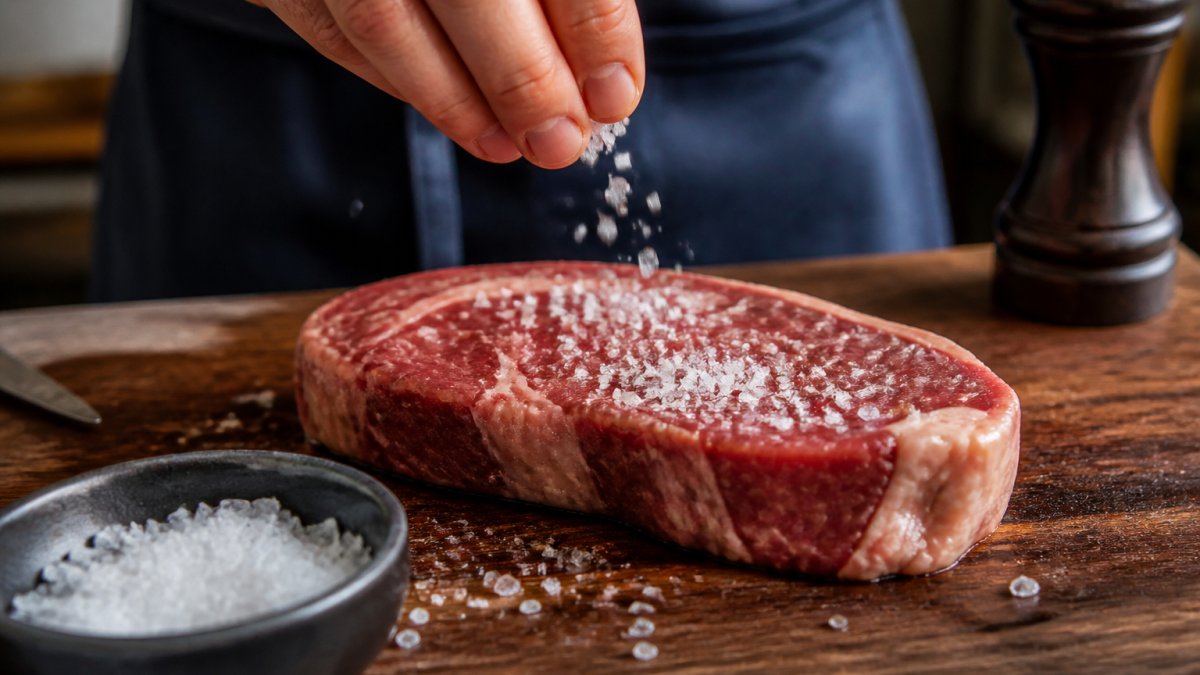
A few practical notes:
- Thicker steaks need more salt per side than thin ones
- A 1-inch steak takes roughly 1 teaspoon total; a 1.5-inch steak can take 1.5 teaspoons
- Salt both sides, then the edges
If you are watching sodium, cut the salt by a third and lean on garlic, onion, and pepper. Salt pulls moisture to the surface and back in, seasoning from the inside out.
Match Salt Quantity to Thickness and Timing
The right amount of salt depends on thickness and timing. A thin cut seasoned hours ahead can taste cured; a thick cut salted at the last minute only seasons the surface.
Use this as a starting point, then adjust to taste:
| Steak Thickness | Salt 40+ Minutes Ahead | Salt Right Before Grilling |
|---|---|---|
| Under ¾ inch | ½ teaspoon total | ¾ teaspoon total |
| ¾ to 1 inch | 1 teaspoon total | 1 teaspoon total |
| 1 to 1½ inches | 1½ teaspoons total | 1¼ teaspoons total |
| Over 1½ inches | 2 teaspoons total | 1½ teaspoons total |
The logic: a long salt rest draws moisture out and pulls seasoned liquid back in, so thick cuts benefit from more salt earlier. Thin cuts have less interior to season, so a heavy early dose can push them toward hammy.
Kosher Salt vs. Table Salt: Measurement Conversions
Kosher salt and table salt do not measure the same. Table salt crystals are finer, so a teaspoon holds far more sodium, the most common reason a steak comes out too salty.
| Salt Type | 1 Teaspoon Weighs | 1 Teaspoon Contains (approx. sodium) | Use This Much |
|---|---|---|---|
| Diamond Crystal kosher | About 3 grams | About 1,120 mg | Baseline amount |
| Morton kosher | About 5 grams | About 1,920 mg | Use about half as much |
| Fine table salt | About 6 grams | About 2,300 mg | Use about half as much |
| Flaky sea salt (e.g., Maldon) | About 2 to 3 grams | About 1,000 mg | Use up to 1½ times as much |
The takeaway: if a recipe says "1 teaspoon kosher salt" and you reach for table salt, use ½ teaspoon. For flaky finishing salt, use closer to 1½ teaspoons.
Lower-Sodium Options That Still Build Flavor
You can cut sodium by roughly a third and still get a well-seasoned steak if you replace the missing salt with aromatics and heat. This matters for anyone managing blood pressure or cooking for mixed dietary needs.
A workable lower-sodium approach:
- Start with ⅔ teaspoon kosher salt per 8 ounces instead of 1 teaspoon
- Add coarse black pepper, garlic powder, and onion powder in equal parts
- Add smoked paprika for depth and a pinch of cayenne or chipotle for heat
The trade-off is real: less salt means a less pronounced crust and less internal seasoning. The aromatics and acid compensate, but for a premium dry-aged cut, a full-salt approach lets the beef speak for itself.
When to Season Steak Before Grilling
Salt your steak at least 40 minutes before grilling, or right before it hits the heat. Skip the in-between window. In that 10 to 30 minute range, surface moisture has drawn out but not been pulled back in.
Your two good options:
- Early: 40 minutes to 24 hours ahead for deeper seasoning
- Late: immediately before grilling, so the salt stays on the crust
Pepper and rubs go on last, right before cooking, pepper burns over high heat.
Dry Brining and Surface Moisture
Dry brining means salting uncovered meat in the fridge so the surface dries as it seasons. This is the gap most guides skip.
Set the salted steak on a wire rack over a sheet pan. Leave it uncovered in the fridge. The cold air pulls moisture off the surface while the salt works inward. For food safety, keep the fridge at 40°F or below, as FDA refrigeration guidance for perishable foods explains.
Captain Dusty's Buccaneer Seasoning →
Best Seasoning for Grilled Steak: Salt, Pepper, or a Full Blend
Salt and pepper alone work well for a great cut, but a full blend gives more depth for everyday steaks. The best seasoning for grilled steak depends on the meat and the moment.
- Salt and pepper: best for dry-aged or premium cuts where you want the beef to lead
- A simple rub: best for weeknight steaks that need a flavor boost
- A bold blend: best for thicker cuts, smoky profiles, and feeding a crowd
A good blend layers salt, pepper, garlic, onion, and paprika so you get browning and flavor in one pass. That is the idea behind our Cannonball Seasoning, a mix of sea salt, black pepper, garlic, onion, and a hint of mustard that works on steak, burgers, and chicken.

Building a Dry Rub for Steak
A dry rub for steak is a mix of salt, pepper, garlic, onion, paprika, and a little sugar, applied right before grilling. Keep the ratio simple and adjust to taste.
Start here:
- 2 parts kosher salt
- 1 part coarse black pepper
- 1 part garlic powder
Pat the rub on all sides, let it sit 15 minutes so it sticks, then grill. For a coastal, smoky profile, our Captain Dusty's Buccaneer Seasoning brings smoked paprika, garlic, onion, chili, cumin, and a touch of brown sugar to build a caramelized crust.

Sugar, Heat, and the Burn Line
Sugar in a rub caramelizes and then burns, and the line between the two is narrow on a hot grill. This is the trade-off most rub guides skip.
Sugar caramelizes around 320°F to 350°F and turns bitter and black not long after. A grill sear runs 450°F to 500°F at the grate, so surface sugar cooks well past caramelization the moment it hits the heat.
How to manage it:
- Keep sugar to a pinch, not a part. A quarter-teaspoon of brown sugar per steak helps bark without turning acrid.
- Grill over indirect heat first, then sear. Start the rubbed steak on the cooler side of a two-zone fire, then finish over direct heat for the last minute or two per side.
- Skip sugar entirely for high-heat sears. For a hard, fast sear on a 500°F grate, leave the sugar out and get color from the Maillard reaction on the beef itself.
Match the Rub to the Cut
Match the rub to the cut. A lean, thin cut needs less; a thick, fatty cut can take more. Fat carries fat-soluble flavor compounds from spices, while lean muscle has less to hold onto.
| Cut | Salt Amount | Rub Style | Why |
|---|---|---|---|
| New York strip | 1 tsp per 8 oz | Simple salt and pepper | Firm texture and moderate fat; a heavy rub can overwhelm the beef |
| Ribeye | 1 tsp per 8 oz | Bold blend, extra pepper | High fat content carries bold spices and rewards a heavier hand |
| Filet | ¾ tsp per 8 oz | Light rub, let beef lead | Lean and tender; strong spices can mask its mild flavor |
| Flank or skirt | 1 tsp per 8 oz | Full rub, more surface area | Thin and fibrous; more surface per bite means more rub is needed |
| T-bone or porterhouse | 1½ tsp per 8 oz | Simple salt and pepper | Two different muscles on one steak; keep the seasoning neutral |
Thin cuts cook fast, so go easy; thick cuts reward a heavy hand. For a crowd with mixed preferences, a neutral salt-and-pepper base lets guests finish at the table.
Why Rubs Fall Off, and How to Make Them Stick
A rub falls off when the surface is wet, when the rub is too coarse, or when it is applied too far ahead. Each has a fix.
- Wet surface: Pat the steak dry until the paper towel comes away clean. Moisture creates a steam layer that lifts the rub off.
- Too-coarse rub: Grind whole spices to a consistent medium grind; large flakes of dried garlic or onion sit on top rather than adhering.
- Applied too early: A rub with salt draws moisture to the surface within 15 to 30 minutes, which loosens it. Apply 15 minutes before grilling, not an hour.
Common Seasoning Mistakes and How to Fix Them
The biggest seasoning mistakes are salting too late, using wet meat, and overseasoning thin cuts. Each is easy to fix.
- Salting 10 minutes before cooking. Salt 40 minutes ahead or right before the grill.
- Skipping the pat-dry. Use paper towels and a few extra minutes.
- Dumping salt in one spot. Sprinkle from high up.
Seasoning, Heat, and Resting: Putting It All Together
Season early, dry the surface, then cook over high heat and rest before slicing. The full sequence ties everything together.
Here is the order we use:
- Pat the steak dry with paper towels
- Salt it 40 minutes ahead, or right before grilling
- Add pepper or a rub just before cooking
- Preheat the grill to high, around 450°F to 500°F
- Sear for 3 to 4 minutes per side for a 1-inch steak
- Check doneness with a meat thermometer
- Rest the steak 5 to 10 minutes before slicing
For doneness, aim for 130°F for medium-rare. The USDA safe minimum cooking temperature chart lists 145°F as the safe minimum for beef, so pick the target that fits your table and pull the steak a few degrees early, since it keeps rising as it rests.
That rest is not optional. It lets the juices settle so they stay in the meat instead of running onto the plate.
Seasoning a steak well is not complicated, but it rewards attention. Rocking Sea Spice Co makes that easier with bold, coastal blends built for the grill, including our Cannonball Seasoning with sea salt, black pepper, garlic, onion, and mustard, our smoky Buccaneer Seasoning, and our peppery Broadside.

Frequently Asked Questions
Should I season my steak before I grill it?
Yes, seasoning before grilling gives the salt time to settle into the meat and the rub time to adhere. For the best results, salt the steak at least 40 minutes ahead, or apply a dry rub 30 to 60 minutes before it hits the heat. If you are short on time, season right before grilling and accept a slightly less developed crust.
How much salt should I use to season a steak?
A common guideline is about 3/4 to 1 teaspoon of kosher salt per pound of steak, or roughly 1% of the steak's weight in salt. A 1-pound New York strip typically takes 3/4 teaspoon of Diamond Crystal kosher salt, while a finer salt like table salt needs less. Season both sides evenly and let the salt sit before grilling.
Should I use a dry rub or marinade for grilled steak?
A dry rub for steak works better for grilling because it builds a seasoned crust and does not add surface moisture that can steam the meat. Marinades add flavor but can dilute browning. For bold results, pat the steak dry, apply a dry rub, and grill over high heat for a caramelized exterior.
Can I season steak right before grilling?
You can, but the salt will not have time to penetrate. If you season right before grilling, use a rub or blend that relies on surface flavor rather than deep absorption. Pat the steak dry first, apply oil lightly, then season both sides and grill immediately over high heat for the best crust.